
DC15 – Amir Masoud Jafarpisheh
University of Edinburgh (UEDIN)
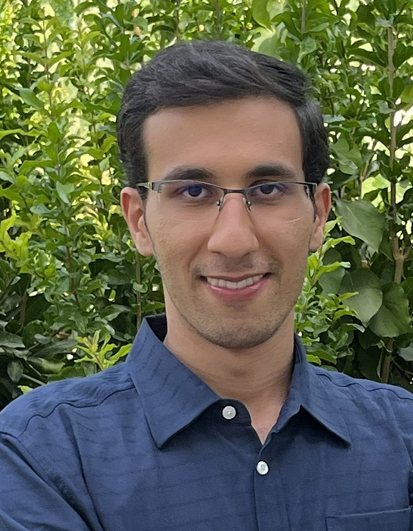
Amir Masoud Jafarpisheh is a researcher in communication systems, information theory, and cryptography. He is a doctoral researcher at the University of Edinburgh under the FOCAL MSCA Doctoral Network. His work focuses on information-theoretic security, distributed systems, and secure network design. He holds an MSc in Secure Communications and Cryptography from Sharif University, Iran and a BSc in Electrical Engineering from Isfahan University of Technology, Iran, both completed with top departmental rankings.
Amir Masoud’s research interests include distributed computation, coding for secure systems, and access-controlled communication networks. He has contributed to international research efforts, and his publications and manuscripts span topics in information-theoretic privacy and secure distributed algorithms. He is also active in academic and professional communities, serving in leadership roles, reviewing for journals, and contributing to student workshops and outreach programmes.
He has served as an instructor and teaching assistant for courses in information theory, probability, digital communication systems, and electrical engineering fundamentals. Amir Masoud has received several distinctions, including first place in the IEEE ISIT 2022 Information-Theoretic Duets competition and multiple academic excellence awards. He also holds patents related to wearable rehabilitation technologies. He continues to pursue work at the intersection of theory and practice, aiming to develop scalable, secure communication solutions for emerging network architectures.
DC15 – Project research
This thesis focuses on building the foundations of secure, large-scale quantum communication for future space and aerial networks. As satellite and high-altitude platforms become central to global connectivity, ensuring long-term, tamper-resistant security is critical for industries such as telecommunications, finance, government, and defence.
The research aims to design QKD-enabled network architectures that can operate reliably over long distances and in rapidly changing atmospheric and orbital conditions. It develops theoretical models to understand the fundamental performance limits of these networks and proposes practical schemes that improve coverage, resilience, and key distribution efficiency. The work also includes simulation and experimental collaboration with industry partners to validate performance under realistic conditions.
By advancing secure communication methods for non-terrestrial environments, this project contributes to the development of next-generation global networks capable of withstanding emerging technological and security challenges.